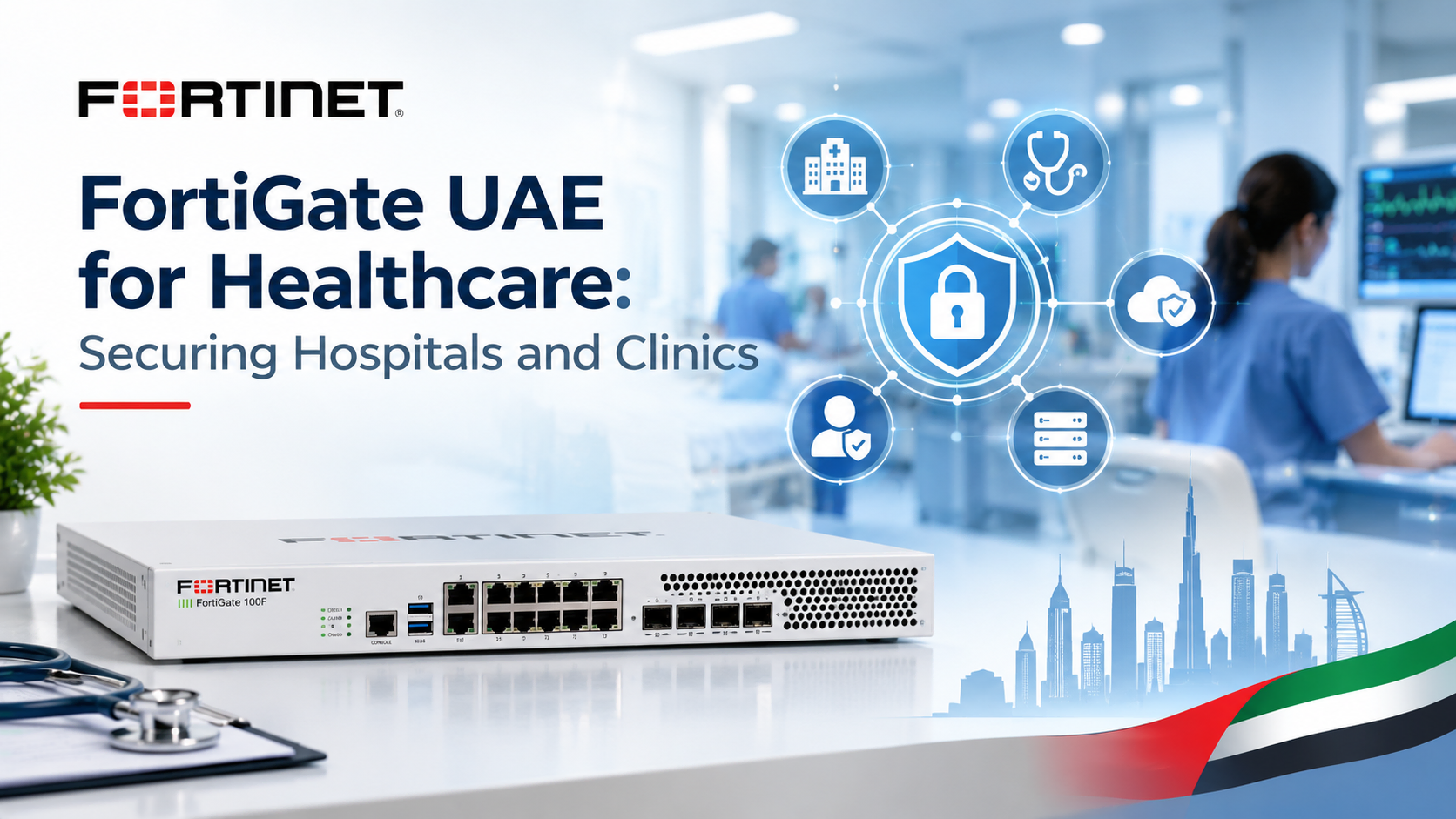
FortiGate UAE for Healthcare: Securing Hospitals and Clinics
FortiGate UAE deployments in healthcare carry a weight most other fields don’t face. A retail shop losing network access for an hour is a bad day. A hospital losing access to patient records, scans, or connected medical devices in that same hour is a real safety risk. Not just an inconvenience.
IT Valley is a certified Fortinet partner in the UAE. This post covers the healthcare side of that work. Hospitals, clinics, and medical groups across Dubai and Abu Dhabi face a different mix of risks than a typical business. A standard firewall rollout rarely covers all of them.
Why Healthcare Security Looks Different From the Inside
A hospital network isn’t one system. It’s dozens of systems, all overlapping. Patient records. Imaging archives. Billing. Staff chat tools. A growing list of connected medical devices too. All of it sits on the same wiring. Each piece often needs very different security.
Ransomware gangs have noticed this too. Healthcare is now a frequent target worldwide. Part of the reason is simple. Downtime pushes some hospitals to pay fast, just to get back online. Part of it is that medical device security often lags years behind normal IT practice. A firewall plan built for a typical office misses both of these risks.
DHA and DoH: What UAE Healthcare Providers Actually Need to Show
Dubai Health Authority and the Department of Health in Abu Dhabi both expect real protection for patient data. Real accountability too, if something goes wrong. That now often means technical proof. Not a written policy sitting in a binder, untouched for years.
A properly set up FortiGate gives you that proof directly. Central logging through FortiAnalyzer shows who accessed what, and when. Segmentation rules prove that patient data doesn’t sit exposed on the same network as guest Wi-Fi in the waiting room. These aren’t abstract checkboxes. They’re the concrete evidence a healthcare review actually wants to see.
Medical Devices Are the Weak Link Most Networks Ignore
Here’s a problem a lot of UAE healthcare IT teams miss. Infusion pumps, imaging machines, and patient monitors often run old software that can’t be patched like a normal laptop. Some manufacturers lock the device down entirely. Known flaws sit unfixed for years as a result.
You can’t always fix the device itself. But you can fix the network around it. Good segmentation keeps medical devices on their own isolated zone. A FortiGate policy controls exactly what can talk to them. If one device gets compromised, the damage stays contained there. It doesn’t spread into patient records or billing systems sitting elsewhere on the network.
Protecting Patient Data Without Slowing Down Staff
Security that slows down patient care doesn’t survive a busy hospital floor. Clinical staff need fast access to records, often from shared workstations, moving room to room all shift. Any security step that adds real friction gets worked around sooner or later, one way or another.
FortiGate’s traffic checks, paired with FortiClient’s Zero Trust access, enforce real security. No slow, multi-step login chore needed. Access gets scoped to exactly what a role needs. It’s checked quietly in the background. Not through a clunky login ritual, repeated all day long.
Connecting Multiple Clinics Without Compromising Security
UAE healthcare groups running several clinics across Dubai and the wider Emirates face the same branch problem banks do. Just with different data moving through the pipe. Patient records need to sync between sites. Imaging files need to transfer too, often as large files that choke a slow connection.
Fortinet SD-WAN handles this well. It routes traffic across multiple links, with full security checks applied the whole way through. A small clinic in Fujairah gets the same protection as a flagship hospital in Dubai. No need for costly dedicated lines connecting every single site.
Remote Consultations and Telehealth Add Another Layer
Telehealth has grown fast across the UAE, and it brings its own security questions. A video consultation carries real patient information. A prescription sent electronically needs the same protection as one written on paper in a clinic. None of that should depend on whether the patient happens to be sitting in a waiting room or at home.
FortiGate and FortiClient extend that same protection to remote sessions. A doctor on a call from home gets the same policy as one sitting at a hospital desk. That matters more each year. Telehealth is now a normal part of UAE care, not some rare exception handled differently from everything else.
Vendor and Third-Party Access Needs Its Own Rules
Hospitals rarely run everything in-house. Equipment vendors need remote access to maintain imaging machines. Billing software providers need a link to process claims. Each one is a possible way in, if it isn’t controlled well. A lot of UAE healthcare networks grant wider access than any single vendor actually needs.
We set vendor access up the same way we handle staff access. Scoped tightly to the one system a vendor touches. Logged fully. Reviewed often, not granted once and forgotten. A vendor fixing an imaging machine doesn’t need a path into the billing database. A proper FortiGate policy makes sure that path just doesn’t exist.
How IT Valley Builds FortiGate Deployments for UAE Healthcare
Device segmentation first. Medical gear kept separate from patient record systems and general staff networks. That limits how far a breach can spread.
Audit-ready logging. FortiAnalyzer set up to produce the records a DHA or DoH review actually asks for. Not a generic report.
Access scoped to clinical roles. Zero Trust rules that match how staff really work. Not a rigid system people end up bypassing out of necessity.
Branch links that hold up. SD-WAN sized for real imaging and record transfer volume. Not just basic web browsing.
Frequently Asked Questions
Can FortiGate protect medical devices that can’t be patched directly? Yes, through segmentation. You isolate the device on its own zone, and control what it can talk to. That limits exposure, even when the device itself can’t be updated.
How long does a healthcare-specific FortiGate deployment usually take? A single clinic can go live in a couple of weeks. A multi-site hospital group takes longer, with full segmentation and audit-ready logs. It needs careful planning too, so patient care isn’t disrupted mid-rollout.
Does IT Valley have real experience with DHA or DoH compliance reviews? Yes. We set up logging, segmentation, and reports with these reviews in mind, from the first planning meeting. That way, the evidence a reviewer asks for is already organized, well before an audit date gets set.
Does extra security slow down how fast staff can access patient records? It shouldn’t, when set up right. Zero Trust access checks run quietly in the background. Staff keep fast access to what their role needs, without a slow login process standing in the way.
Talk to IT Valley About Healthcare Security
Running IT for a hospital, clinic, or medical group in the UAE means juggling patient safety, staff workflow, and real compliance rules, all at once. Get in touch with IT Valley’s certified Fortinet engineers. We’ll give you a straight read on what your facility’s setup actually needs.