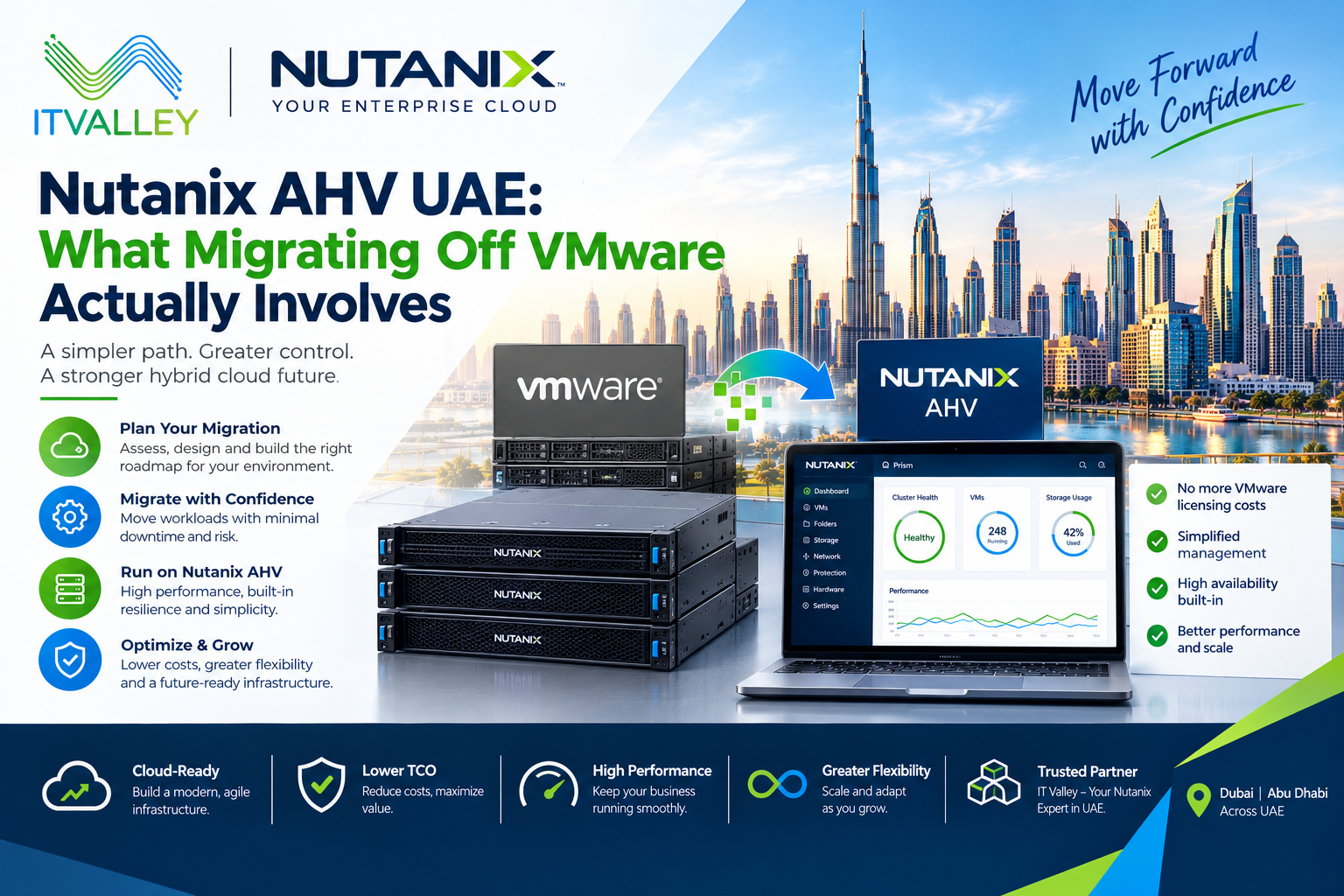
Nutanix AHV UAE: What Migrating Off VMware Actually Involves
Broadcom’s pricing changes pushed a lot of UAE IT teams into a conversation they didn’t want. Perpetual VMware licenses are gone. Cloud Foundation bundles cost more than most teams budgeted for. Nutanix has been the main beneficiary, and for good reason.
IT Valley is a certified Nutanix partner in Dubai. This post digs into one question we get constantly. What does a VMware-to-Nutanix migration actually involve? Is it as painful as people assume?
AHV: The Hypervisor You Don’t Pay Extra For
Nutanix AHV is the hypervisor built into every cluster. Unlike VMware’s ESXi, there’s no separate license just for the hypervisor. It’s already part of the platform.
That one fact changes the math for a lot of UAE businesses. You’re not paying a hypervisor fee, a management fee, and a support fee as three separate charges. Prism, the management layer, comes bundled too. One login shows your compute, storage, and networking. No more juggling vCenter, a storage console, and a separate networking tool.
Nutanix Move: The Tool That Does the Heavy Lifting
VM migration used to mean manual exports and format conversions. And a lot of crossed fingers. Nutanix Move automates most of that work. It reads your VMware environment, converts VMs to run on AHV, and keeps downtime short. Think a quick cutover window, not a weekend-long outage.
For a UAE business running fifty or a hundred VMs, that difference matters a lot. We usually stage a migration in batches. Each group gets tested on AHV before the next one moves. It’s slower than one big cutover. But nobody’s production app goes down over a surprise compatibility issue.
Disaster Recovery Built In, Not Bolted On
VMware users often pay separately for disaster recovery tools. Or they build something custom with third-party software. Nutanix bakes DR right into the platform. Replication, failover, and recovery testing all run from the same Prism console you already use every day.
For UAE businesses under CBUAE or DIFC rules, that’s more than convenience. Regulators want documented, testable recovery plans. Proving that inside one platform beats stitching together three vendors during an audit.
Files, Objects, and Databases: What Else the Platform Covers
Many UAE businesses start with Nutanix just for VM hosting. Then they find the platform covers more ground. Nutanix Files handles shared file storage. Nutanix Objects covers S3-compatible object storage. Nutanix Database Service automates database setup and patching. That work usually eats more DBA time than anyone plans for.
None of this is mandatory, though. Plenty of clients run Nutanix purely as a VMware replacement. That’s a perfectly reasonable place to stop. The option to add more later is simply there, if it makes sense down the line.
What a Realistic Migration Timeline Looks Like
Every migration is different. But a mid-sized UAE deployment usually follows a similar shape.
Assessment. We map your current VMware setup and its dependencies. We flag which workloads need zero downtime, and which can wait for a maintenance window.
Pilot batch. A small, low-risk group of VMs moves first. This checks performance and compatibility before anything critical touches AHV.
Staged migration. The rest move in planned batches. Each one gets tested before the next begins.
Decommission. Old VMware infrastructure gets retired once everything’s confirmed stable. Not a moment before.
Rushing this is where most migration horror stories start. A properly staged rollout takes longer. But it’s the difference between a quiet weekend and a support ticket nightmare.
Frequently Asked Questions
Will our VMs run the same on AHV as they did on VMware? In almost every case, yes. AHV supports most standard workloads with no changes needed. We test each batch before moving the next, just to catch the rare exception early.
Do we have to migrate everything at once? No. Most UAE businesses run a hybrid setup for a while. Some workloads sit on Nutanix, others stay on VMware, until the full migration finishes on their own timeline.
Is Nutanix actually cheaper than staying on VMware Cloud Foundation? For most mid-sized UAE deployments, yes. That’s true once you count the hypervisor, management, and DR licensing VMware now bills separately. The exact number depends on your contract. We run a real comparison before recommending anything.
Talk to IT Valley About Your Migration
Thinking about moving off VMware? Or just want an honest cost comparison before renewal? Get in touch with IT Valley’s certified Nutanix engineers. We’ll give you a straight read on what migration would actually look like for your UAE environment.